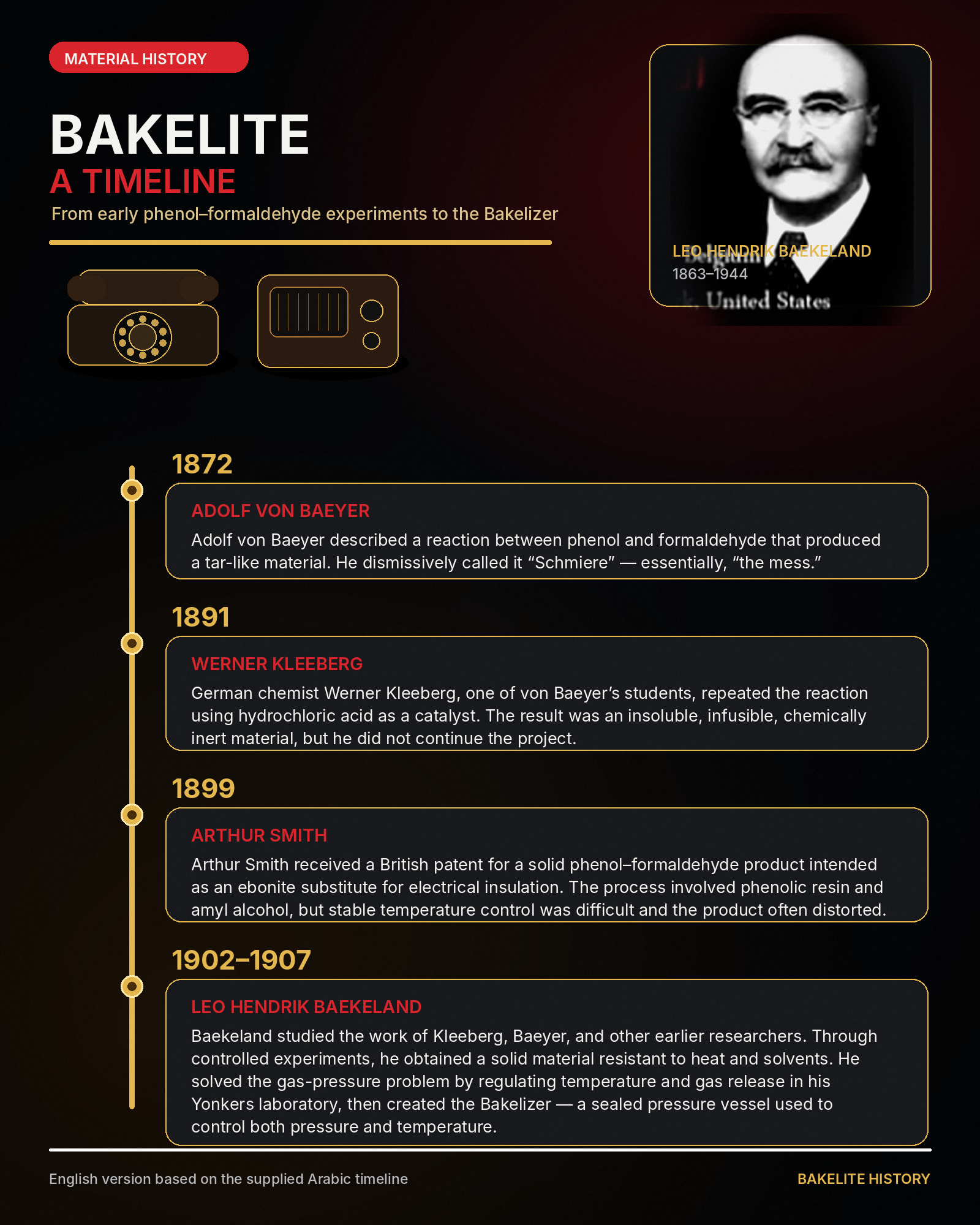
Bakelite – Historical Timeline
1872
Adolf von Baeyer described a reaction between phenol and formaldehyde that produced a tar-like substance, which he dismissively referred to as “the sticky material.”
1891
German chemist Werner Kleeberg, one of Adolf von Baeyer’s students, repeated Baeyer’s phenol-formaldehyde experiment using hydrochloric acid as a catalyst.
The result was a material similar to Baeyer’s, but it was insoluble, infusible, and chemically inert. Kleeberg did not pursue the project further.
1899
Arthur Smith was granted a British patent for a hard phenol-formaldehyde product prepared by reacting phenol with amyl alcohol.
The process required a stable temperature and frequently resulted in deformation during production.
1902–1907
Leo Hendrik Baekeland studied the work of Kleeberg, Baeyer, and other pioneers to better understand the chemistry of phenol-formaldehyde reactions. Through continued experimentation, he succeeded in producing a solid material that was resistant to heat and solvents.
Baekeland solved the problem of gas pressure by slowing the reaction at lower temperatures before gradually increasing the temperature while carefully controlling the release of gas. He developed this successful process in his laboratory in the Yonkers suburb of New York, USA.
He then invented the **Bakelizer**, a sealed pressure vessel that allowed precise control of both pressure and temperature during the manufacturing process.
Source: German Bakelite Museum
البكلايت – التسلسل الزمني
1872
وصف “أدولف فون باير” تفاعلاً بين الفينول والفورمالديهايد ينتج عنه مادة شبيهة بالقطران، والتي أطلق عليها باستهجان اسم: المادة اللزجة.
1891
قام الكيميائي الألماني “فيرنر كليبيرغ” وهو أحد طلبة أدولف فون باير بتجربة تفاعل باير مع الفينول والفورمالدهيد باستخدام حمض الهيدروكلوريك كمحفز.
كانت النتيجة مادة مشابهة لمادة باير، لكنها كانت غير قابلة للذوبان وغير قابلة للانصهار، وخاملة كيميائياً. لم يتابع كليبيرغ هذا المشروع.
1899
حصل “آرثر سميث” على براءة اختراع بريطانية لمنتج صلب من الفينول والفورمالدهيد تم تحضيره من تفاعل مع مذيب الفينول وكحول الأميل.
واحتاجت التجربة إلى درجة حرارة مستقرة وتشوهت غالباً أثناء هذه العملية.
ما بين الأعوام 1902 إلى عام 1907
قام ليو هندريك بيكلاند بدراسة أعمال كليبيرغ وباير وأسلافهم الآخرين لأنهم بدأوا في تفسير تفاعلات الفينول والفورمالدهيد المناسبة. واصل بيكلاند تلك الدراسات حتى حصل على جسم صلب مقاوم للحرارة والمذيبات.
وحل مشكلة ضغط الغاز بفكرة تباطؤ التفاعل مع درجات حرارية منخفضة حتى وصل إلى الفكرة الناجحة بزيادة درجة الحرارة والسيطرة على إخراج الغاز، وذلك في معمله في ضاحية يونكرز بمدينة نيويورك الأمريكية.
حينها قام باختراع جهاز Bakelizer، وهو غلاية بخار مغلقة يمكن من خلالها ضبط الضغط ودرجة الحرارة.
المصدر: متحف البكلايت الألماني